
Key takeaways
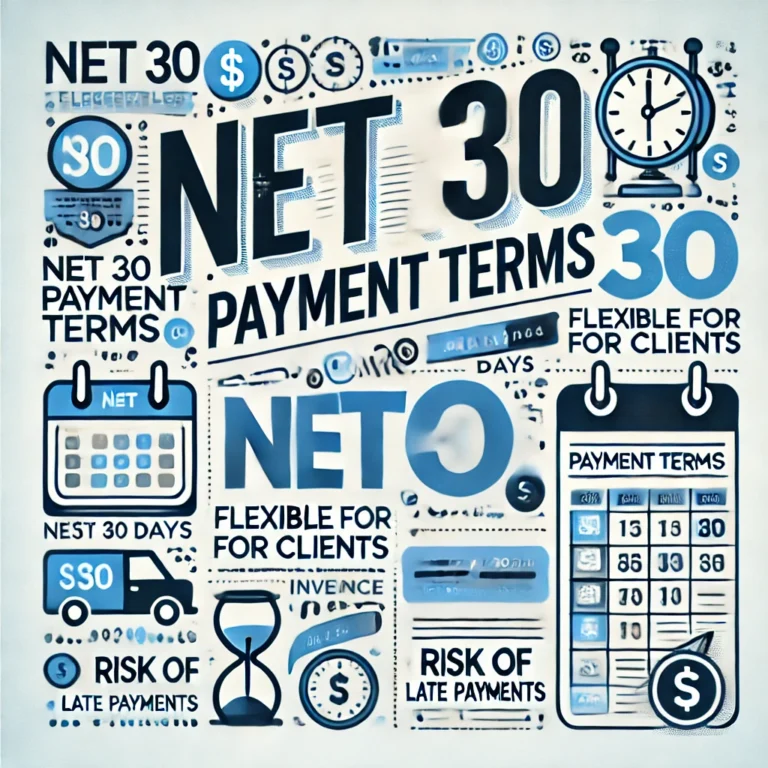
- Invoice factoring converts accounts receivable into cash quickly, helping bridge net-30/60/90 payment gaps.
- It’s not a loan—you’re generally selling an asset (your invoice), so it typically doesn’t add traditional debt to your balance sheet.
- Approval is driven largely by your customers’ creditworthiness, which can make factoring accessible even if your business is newer or has limited borrowing history.
- Factoring fees are usually a deductible business expense, which may help reduce taxable income when recorded properly (confirm treatment with a tax professional).
- Factoring can be a strong fit for B2B firms with steady invoicing but uneven cash flow, especially those with reliable, creditworthy customers.
- The trade-off is speed for cost: you get cash sooner, but you won’t receive 100% of the invoice value and the factor may interact with your customer.
How to reduce tax burden with invoice factoring
Imagine you run a staffing agency. You just placed a team of temporary workers for a large client, and you’ve invoiced $10,000 for the first billing cycle. The problem? The client’s terms are net 60, but you still have to cover weekly payroll, payroll taxes, and recruiting costs now. You’ve earned the revenue, but the cash isn’t in your account yet—creating the “cash flow gap” that can limit how quickly you can take on new placements.
This is why many B2B firms use invoice factoring to stabilize cash flow. Instead of waiting for the client to pay, you sell that unpaid invoice to a third party. A factoring company advances a large portion of the invoice value—say, $8,000 of the $10,000—often within a day or two. That working capital helps you meet payroll on time, fund recruiting, and grow without taking on traditional debt.
While the primary benefit is faster access to cash, there’s also a tax angle. The fee you pay the factoring company is generally a legitimate business expense. When recorded properly, that cost can reduce your taxable income for the year—turning a cash flow tool into a more strategic financial move.
RELATED: Top 10 B2B Finance Options That Free Up Cash
What is Invoice Factoring? (A Simple Analogy)
To understand invoice factoring, think of it like taking an early payout on a rebate you’ve already earned. Imagine you bought equipment that comes with a $100 mail-in rebate, but the manufacturer won’t send the check for 6–8 weeks. If you need cash today, you might choose to sell the right to that rebate to someone for $95. You receive money immediately, and they collect the full $100 later—so you trade a small amount of value for speed.
Invoice factoring works the same way in the business world. When a company has unpaid invoices, it can sell those invoices to a specialized financial firm. That firm—called a factoring company, or “factor”—pays the business most of the invoice value upfront, so the business doesn’t have to wait for the customer’s payment terms to run out.
This changes an invoice from a “future payment promise” into a usable asset that can generate cash now. It’s a practical tool for managing working capital—but what does the full transaction look like from start to finish?
RELATED: Common Misconceptions About Invoice Factoring
How Does Factoring Actually Work? A Step-by-Step Example
Seeing the process in action makes it much clearer. Let’s follow a mid-sized commercial janitorial services company that just completed a month of work for a large regional property management group and issued a $10,000 invoice. Instead of waiting 60 days for payment, the company decides to sell the unpaid invoice for cash. It submits the invoice to a factoring company, kicking off a simple, four-step journey.
First, the factoring company verifies the invoice and advances a large portion of the money immediately—often within a day or two. This upfront payment is called the Advance and is typically 80% to 90% of the invoice’s value. In this example, the factor provides an 80% advance, so $8,000 is deposited to the company’s account. The remaining $2,000 is held back as the Reserve.
Next, the service provider’s work is done. The factoring company now owns the invoice, and it’s their job to collect the payment. When the 60-day payment term is up, the property management customer pays the full $10,000 directly to the factoring company, not to the janitorial company. That can reduce the time and effort spent on follow-ups and collections.
Once the customer pays, the transaction is complete. The factoring company releases the $2,000 Reserve back to the janitorial company, minus its fee. If the fee is $500, the company receives a final payment of $1,500. In total, it received $9,500 on a $10,000 invoice—while getting most of the cash almost two months earlier. The key terms to remember are Advance and Reserve. But that brings up an important question: how are those fees actually determined?
What’s the Catch? A Plain-English Guide to Factoring Costs
That final step—where the factoring company keeps a portion of the reserve—is where they get paid. It’s natural to ask: what are factoring rates, and is the cost worth it? The fee is a small percentage of the total invoice, not the entire 20% held back in the reserve. Think of it as a service charge, similar to paying for express shipping; you’re paying a predictable fee to get something valuable (your cash) much, much faster.
This fee is calculated using what’s called a Factoring Fee or, more formally, a Discount Rate. It isn’t a one-size-fits-all number. Instead, the rate often depends on how long it will take your customer to pay. For instance, a factoring company might charge a lower rate for an invoice due in 30 days and a slightly higher one for an invoice due in 90 days. This directly sets the price for the service based on the time and risk involved.
Looking back at our janitorial services company $10,000 invoice, the 5% fee for the 60-day term meant the total cost was $500 (5% of $10,000). They ultimately received $9,500 for an invoice that would have otherwise taken two months to collect. For many businesses, having thousands of dollars in cash to make payroll or buy supplies is well worth that cost. This simple trade-off is a core part of invoice factoring.
RELATED: How to Calculate if Factoring Will be Cost-Effective for Your Business
The Tax Question: How Factoring Fees Can Lower Your Taxable Income
That surprising benefit has to do with your taxes. Many operational costs can be subtracted from your company’s total income before you calculate the tax you owe. These are called tax-deductible expenses. The fees you pay to a factoring company are a classic example of this. It’s a cost of doing business that can directly help you reduce your tax burden.
To see how this works, imagine your small business made $100,000 in profit this year. During that same period, you paid $5,000 in factoring fees to maintain a healthy cash flow. When it’s time to file taxes, you can deduct that fee from your profits. Instead of being taxed on the full $100,000, your taxable income becomes $95,000. While you still pay the fee, this deduction softens the overall financial impact by lowering your final tax bill.
This isn’t a special loophole; it’s a standard business accounting practice, just like deducting the cost of rent or marketing. The fee is simply the price of accessing the service. Understanding this financial detail is important, but it also raises a bigger question: if factoring provides cash and has a fee, how is it different from just getting a bank loan?
RELATED: Alleviate Tax Pressures with Invoice Factoring
Is Factoring a Loan? A Clear Comparison to the Bank
While both factoring and bank loans put cash in a business’s bank account, they aren’t the same. A bank loan is debt you borrow and must repay. Invoice factoring, on the other hand, isn’t a loan at all—it’s the sale of one of your assets.
Think of it like this: getting a business loan is like borrowing money against your house. You get cash, but you now have a debt to pay back. Factoring is like selling a spare car you own. You trade ownership of the asset (in this case, your unpaid invoice) for immediate cash. It’s no longer yours to worry about, and you haven’t taken on new debt.
The practical debate between invoice factoring and a traditional bank loan becomes clearer once you focus on how each one works. With invoice factoring, you’re not borrowing—you’re selling an asset, your accounts receivable, in exchange for faster access to cash. Because of that, approval is driven largely by your customer’s creditworthiness and payment history, since the factor expects to be repaid when your customer pays the invoice. Factoring also doesn’t add debt to your balance sheet, because it’s a sale of receivables rather than a loan obligation, and funding is often fast, commonly within 1–3 days.
A traditional bank loan is the opposite in structure: you’re borrowing money and agreeing to repay it over time under set terms. Banks usually base approval on your business’s credit profile, financial history, and collateral, and the financing generally creates debt on your books. The process can also take significantly longer—often weeks or months—due to underwriting, documentation, and approval timelines.
Ultimately, the choice comes down to a business’s specific needs. A bank loan is often for predictable, long-term growth, like buying major equipment. Factoring is built for speed, solving the immediate and often unpredictable problem of waiting to get paid. This distinction is crucial for figuring out which tool is the right fit.
RELATED: Factoring Invoices vs. Conventional Business Loans
Who Should (and Shouldn’t) Use Invoice Factoring?
While it’s a powerful tool, invoice factoring isn’t a one-size-fits-all solution. It’s specifically designed for businesses that sell products or services to other businesses (B2B) and have to wait 30, 60, or even 90 days for payment. Think of a commercial cleaning company that services office buildings or a parts manufacturer selling to a large automaker. These companies are often growing fast and need reliable cash to cover payroll and buy supplies for their next big job. For them, waiting for a customer to pay can halt their momentum entirely.
In essence, factoring companies are betting on your customers, not on you. The main eligibility requirements aren’t about your personal credit score or how long you’ve been in business. Instead, they focus on the quality of your invoices. They want to see that your customers are established, reliable companies with a good history of paying their bills. Because the factoring company will be the one collecting the payment, they need to be confident that your customer will pay up.
This focus on your customers also highlights when factoring is a poor fit. If you sell directly to the general public—like a retail store or a coffee shop—factoring won’t work, as there are no large invoices to sell.
Ultimately, factoring is ideal for a growing B2B company with reliable customers but inconsistent cash flow. It’s a bad fit for businesses that sell directly to consumers or those that can’t afford to spare a small percentage of their revenue for the convenience of immediate payment. Understanding this profile is the first step in deciding if factoring could work for you.
RELATED: Why CPAs Recommend Invoice Factoring
Weighing the Pros and Cons of Selling Invoices
Before, the idea of “selling an invoice” might have sounded like a piece of complex financial jargon. Now, you can see it for what it is: a straightforward solution to a common and frustrating business problem. You’ve unlocked the logic behind how a successful company can be rich on paper but short on cash, and you understand the specific tool designed to bridge that gap.
This brings us to the core question: is selling your invoices a good idea? The answer always involves weighing speed against cost. The clear benefits of invoice discounting are balanced by its price. To make that decision easier, here is the fundamental exchange at a glance.
The Simple Trade-Off
Pros
- Fast access to cash flow
- No new debt is created
- Approval is based largely on your customers’ creditworthiness
Cons
- You won’t receive 100% of the invoice value
- Fees can be higher than a traditional loan
- The factoring company may interact directly with your customer
You’re no longer just looking at a financial product; you’re seeing a strategic choice. You now understand that a business isn’t just buying money—it’s buying time and opportunity. Invoice factoring isn’t free money, but it’s a powerful tool for turning future revenue into present-day cash, giving businesses the fuel they need to operate and grow without waiting.
RELATED: Common Misconceptions About Invoice Factoring
The Bottom Line
Invoice factoring can be a practical way to turn accounts receivable into predictable working capital—helping you cover payroll, fund operations, and take on new work without waiting through long payment terms. And, the cost of factoring is typically recorded as a business expense, which may reduce taxable income when accounted for correctly.
The right move depends on your margins, your customers’ payment reliability, and whether speed and flexibility matter more than the absolute lowest cost of capital. If you’re consistently profitable but cash-flow constrained, factoring may be a strong fit—especially when paired with clean bookkeeping and guidance from your accountant or tax advisor.
Your Partner for Fast, Flexible Business Financing
Universal Funding Corporation is a trusted, privately owned invoice factoring company that has helped B2B businesses nationwide improve cash flow, access working capital, and maintain financial stability since 1998 by converting unpaid invoices into immediate cash. With fast, flexible accounts receivable financing solutions, funding in as little as 24 hours, and competitive rates, Universal Funding offers a personalized, relationship-driven alternative to traditional lenders. Universal Funding helps growing B2B companies facing delayed customer payments stay focused on operations, growth, and long-term success.